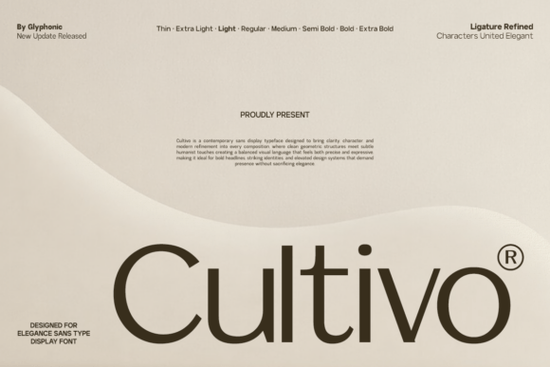
Many graphic designers and small business owners face a common dilemma: they need typography that stands out but remains readable across various media. You cannot simply grab a basic Arial clone for a premium brand identity. You require a tool that balances precision with character. This is where Cultivo Font becomes essential. It bridges the gap between strict geometric structures and subtle humanist touches, offering a balanced visual language suitable for both high-end tech interfaces and elegant print projects.
How does this typeface handle different weights and styles?
A font is only as good as its versatility. Cultivo was engineered to support complex composition needs without losing its core identity. Because it functions as a sans-display typeface, it provides unyielding clarity. This means your message gets through, whether viewers are reading it on a mobile screen or scanning a printed poster. The character spacing is refined, which prevents awkward gaps between letters a common issue with many lower-quality free downloads.
One of the standout features is the inclusion of elegant ligatures. These connect letter forms smoothly, creating a professional flow that mimics hand-lettering while maintaining machine-made consistency. If you have ever struggled with adjusting kerning manually to fix tight letter pairs, this feature saves significant time. It ensures that even complex words look balanced and intentional right out of the box.
Which projects benefit most from this design choice?
The application of this font goes beyond simple headlines. Its signature presence works exceptionally well for brand identities where a unique mark is required without being overly decorative. Think of modern startups that need to look tech-forward but trustworthy. The clean lines reinforce stability, while the slight curves add approachability.
However, it is important to know when to use alternatives to ensure variety in your portfolio. While Cultivo offers a sleek, contemporary look, other tools serve different moods. For instance, if you are working on a project requiring a softer, rounded aesthetic, checking out Kohilo Font might provide the perfect counterbalance. It keeps the simplicity but changes the structural tension significantly.
Similarly, consider the audience you are targeting. Corporate clients might prefer the sharp edges of Cultivo, whereas lifestyle brands could benefit from a friendlier touch. If you decide to branch out, exploring Perfect Lemonade Font offers a distinctively bright vibe that can complement darker, heavier typefaces. Mixing these styles allows you to create visual hierarchy effectively.
What about texture and hand-crafted details?
Sometimes, a purely digital look lacks the warmth required for certain packages. If your project involves craft supplies, greeting cards, or casual merchandise, adding a hand-drawn element can ground the design. In these scenarios, pairing a clean sans-serif with a textured script or marker font adds depth. For example, integrating Summer Marker Font alongside a structured typeface creates a dynamic contrast. This combination captures attention by balancing order with spontaneity.
It is crucial not to overuse these effects. Stick to two distinct styles per layout maximum. Too many competing personalities dilute the message. Using Cultivo as your base allows other elements to shine without causing visual clutter. The precise structure acts as a stable foundation upon which you can layer graphics or secondary typography.
When sourcing materials, quality matters significantly. Downloading compromised files can lead to licensing issues or broken characters during printing. Ensuring you access the official source guarantees you receive the complete OpenType features, including alternate glyphs and proper weight distributions. This reliability is vital for production workflows where time is money.
Are there installation quirks to watch out for?
Typographically advanced fonts often come with hidden features like swashes or stylistic sets. Before committing to a large batch of print orders, test these features on a physical sample. Some users report minor adjustments needed for specific kerning pairs in very small point sizes. Always preview the full alphabet to spot any irregularities before sending files to the printer.
If you are unfamiliar with managing font libraries, organizing files helps prevent version conflicts. Store the main version separately from experimental tests. This habit keeps your workspace tidy and ensures you always revert to a stable version if something looks off. Remember that software compatibility varies; always verify your design tools support the specific OpenType features of the file.
Ultimately, selecting the right asset is an investment in your final output. It impacts legibility, mood, and perceived value. By understanding the capabilities of Cultivo Font, you equip yourself with a reliable resource. It simplifies the decision-making process so you can focus on creativity rather than troubleshooting type issues.
Practical Implementation Checklist
- Download: Ensure you acquire the full package including web fonts if needed.
- Test: Run spelling tests with your brand name to check ligature behavior.
- Preview: Create mockups on both light and dark backgrounds.
- Compare: Look at Kohilo or Perfect Lemonade if Cultivo feels too rigid.
- Layer: Add Summer Marker elements for contrast only in key spots.
- Licensing: Review usage rights for commercial versus personal projects.
- Export: Save a subset of characters for web performance optimization.
Taking these steps ensures your typography enhances rather than distracts. A well-placed font choice builds trust and guides the user's eye exactly where you intend. Treat every pixel as a deliberate move in your overall strategy.
Learn More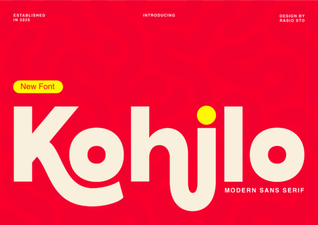 Kohilo Font: Creative Projects & Layout Ideas
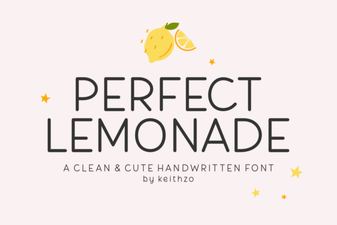 The Perfect Lemonade Font for Fresh Designs
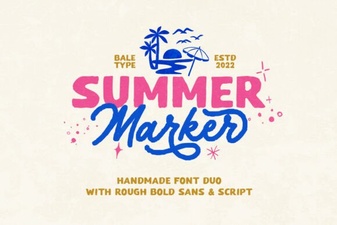 Bright Summer Marker Fonts for Creative Projects
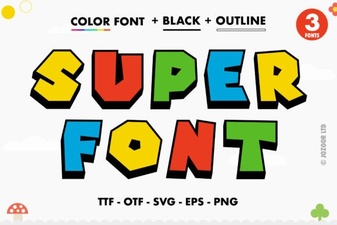 Crafting with Super Fonts: Design Projects & Ideas
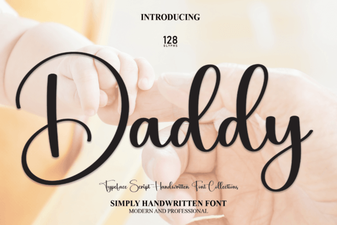 The Daddy Font Family for Creative Design Projects
 Rabbit Hole Font: a Typographic Exploration Guide